August 22, 2026
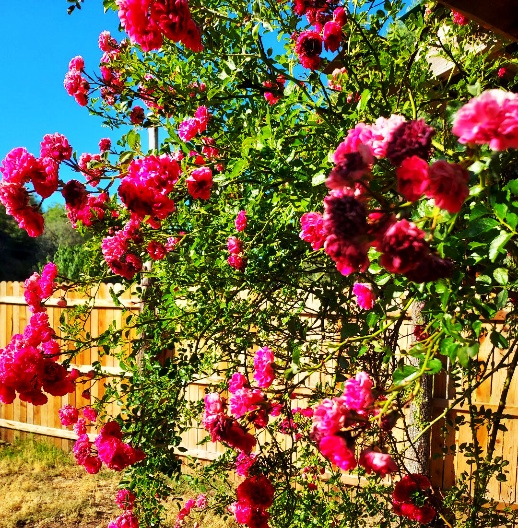
Some years ago, I noticed in astonishment a rose bush I had planted. The champagne-colored blossoms I expected weren’t there. The bush, unusually large, was covered in a profusion of rich, red flowers. “This simply can’t be!” I thought, my brain reeling at the impossibility of a rose bush that had literally changed color. I had never been satisfied with the blandness of the vanished rose against the brown fence. The blossoms were too small, the shrub spindly, the color inappropriate. And now a vibrant mass of color greeted me! What miracle had happened to give me just what was needed? How had God managed this feat? I had done nothing to bring about such a change, basically having ignored the rose bush. Apparently, winter freeze had killed the top, likely a graft onto a heartier root stock. And now the true nature of the rose had burst forth in its crimson splendor. God’s original creation, not man’s distortion of it, had come forth at last.
I recognized the allegory of this wondrous rose for many troubling things in our world and in my own life. How God works his patient will with mankind, with society, and with me. We may not understand his often-subtle workings, nor consciously contribute to his plan. Yet on occasion we suddenly see it manifest, as had happened on my own journey of self-discovery. As with God’s roses, my true self eventually surfaced. I had been like the former rose, a pale, struggling creation of other people. My own “winter,” a time of great personal crisis, had pruned away that surface appearance, a false self. God’s painful but nurturing help revealed the deeper, richer personality within me.
Perhaps the pessimism I sometimes feel about society and the seemingly endless conflict in the world fails to consider the working of God’s will, his boundless love for us, and the epic scale of his plan. God’s roses tell me that, in truth, all will be well, but perhaps after some struggling.